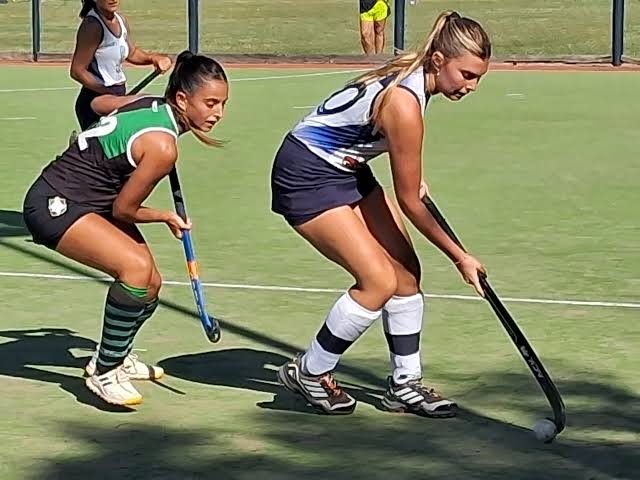
Rosario becomes one of Argentine girls' youth hockey's central locations for four days. From Thursday 29 October through Sunday 1 November, the city hosts five club competitions: the national under-19 A and B championships, the NEA regional under-19 A and B tournaments and the regional under-14 C event. Bringing them together places different levels and ages inside one operational structure.
The Luciana Aymar World Cup Stadium at Suinda 850 serves as the main venue. The network is completed by pitches at Jockey Club, Gimnasia y Esgrima de Rosario, Club Provincial's country complex and Old Resian. Distributing matches across five facilities prevents one surface from being overloaded and makes local institutions active participants in a national and regional organisation.
Competition occupies an extensive daily window. Thursday and Friday run from 8.30am to 10pm, Saturday from 9am to 9pm, and Sunday from 8.30am to 6pm for the decisive matches. That volume requires careful coordination of transport, warm-up slots, medical attention and recovery, particularly for youth squads playing several fixtures within a short period.
The national under-19 championships bring clubs from different associations together in the A and B levels. In parallel, the NEA regionals provide their own competitive route at under-19 and under-14 level. Sharing a location does not erase the distinctions between them, but it creates a common observation space for coaches, players and officials engaged in talent development.
Sunday takes the finals to the Luciana Aymar stadium. The municipal agenda schedules decisive matches at 10.50am, 12.40pm, 2.30pm and 4.20pm for levels identified as E, D, C and B. Regardless of each category's specific label, concentrating the closing programme at the World Cup venue creates a recognisable stage and allows the final day to celebrate the broader event together.
The Litoral Field Hockey Association is responsible for organisation, with support from the municipal Sports and Tourism Secretariat. That coordination is essential: clubs contribute pitches and daily expertise, the association manages competition, and the city supports an influx of delegations that also affects transport, accommodation and tourism activity throughout the weekend.
The sporting outcome will produce champions, but the meeting's effect is wider. Every match provides experience of pressure, shared routines and adaptation to different surfaces and opponents, all central elements of youth development. Once the finals end, Rosario will have connected high-performance infrastructure with the regional base; the next challenge is turning four intense days into sustained competitive continuity across the season.