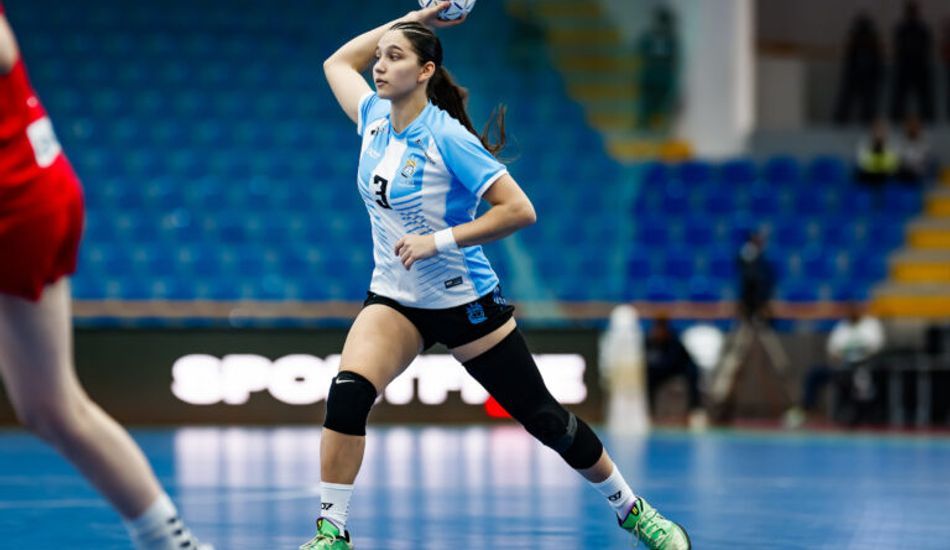
Argentina's women's U16 team lost 41-21 to Russia in its second appearance in Group D of the inaugural World Championship at this age level. The game took place at Al Inbiaat Hall in Agadir, Morocco, and left the Cadets with two defeats after their opener against Switzerland. The wide final margin does not erase a first half in which Argentina sustained competitive passages against European power. The episode deserves a broader reading: its importance comes not only from the headline fact, but also from the competitive moment, the decisions it forces and the way it shapes the immediate path of everyone involved.
The opening showed a different response from the debut. Tiziana Sica and Lucía Maschietto scored Argentina's first goals, while Victoria Trebini contributed two early saves. That combination allowed an exchange of scores through the initial minutes. The main difficulty appeared in defence, where Argentina could not consistently contain the speed, circulation and shooting power of the Russian attack. The sequence explains the process rather than merely the outcome. Every choice altered what followed, so the order of events is essential to understand why the story eventually acquired this sporting weight.
Russia caused damage through fast breaks and long-range shots, creating an initial 7-2 advantage. Hernán Siso called a timeout and the pause helped his side regain order. Another Maschietto goal, a steal and finish by Alma Albino and a further Trebini save reduced the gap. The response did not remove the problem, but demonstrated an ability to make adjustments within an elite-level contest. That passage contained much of the tension. Execution, timing and response came together there, three elements that separate a decisive action from a simple collection of facts within the larger development.
The remainder of the first half contained passages for both teams, although Russia continued to extend its lead. Elizaveta Sapozhnikova was one of the European side's attacking references, while Varvara Novikova supported it in goal. Micaela Zanghi, Julia Peletin and Oriana Repetto contributed from Argentina's back line. The 20-12 half-time score reflected the difference without eliminating the Cadets' positive moments. What happened afterwards is also part of the story. Managing an advantage, correcting a weakness or preserving a plan after the context changes requires a collective reading that a final score does not always reveal.
After the break, Russia raised the tempo again through firm defence and long-range shooting that troubled both Argentine goalkeepers. Ten minutes into the half, the scoreboard read 28-14 and the recovery had become more complex. Argentina tried to preserve its energy and find clearer attacks, but the opposition widened the margin as fatigue grew before sealing the 41-21 outcome. The competition format magnifies those consequences. One performance can change positions, create an opportunity or close a route, which is why the result has to be interpreted through both the standings and the schedule.
Repetto finished as Argentina's leading scorer with five goals. Albino and Peletin added four apiece; Maschietto and Zanghi scored three, while Sica and Sofía Delgado completed the total with one each. The distribution shows that Argentina found answers from different positions, even though it could not sustain its efficiency or offset the defensive difference across the entire match. The assessment must remain within the documented evidence. Names and numbers provide precision, but the analysis becomes more useful when it separates confirmed facts, possibilities that remain open and conclusions that cannot yet be advanced.
The Cadets close Group D against Egypt on Tuesday, October 20 at 1:15 p.m. Their opponent arrives after beating Switzerland 29-28, meaning the final round will again present a demanding test. Siso's side must extend the competitiveness of its first half, reduce turnovers and turn the experience of its first two matches into progress in a tournament that is itself new for the age group. The next commitment will provide a fuller measure. What was gained or lost already belongs to this round; the new challenge is to turn the experience into continuity, learning and another competitive response that can be verified.